
I have been testing GPUs across price points for the past two months, and the 2026 market is genuinely interesting. NVIDIA and AMD are competing hard, which means buyers are getting more performance per rupee/dollar than any point in the last four years. Here is where I land after hands-on testing.
The GPU Market in 2026: What Changed
Two things shifted the landscape this year. First, NVIDIA's RTX 50 series brought DLSS 4 with Multi Frame Generation to mainstream cards — not just the flagship. Second, AMD's RX 9000 series closed the gap on rasterization performance while undercut NVIDIA on price at the mid-range. The result: buyers have real choices at every tier for the first time in years.
AI upscaling (DLSS, FSR, XeSS) is now a standard feature rather than a premium one. In 2026, most people are not rendering native 4K — they are rendering at 1440p or even 1080p and using AI upscaling to hit 4K quality at much higher frame rates. This changes which GPU specs actually matter.
Budget Pick (Under ₹20,000 / $250): AMD RX 9060 XT
The RX 9060 XT is the surprise of 2026. AMD launched it aggressively priced and it delivers 1080p high-settings performance that would have cost twice as much two years ago. In my testing across ten games at 1080p max settings, it averaged 85 FPS — completely playable without any upscaling enabled.
What I like: 12GB VRAM at this price is generous. Modern games are pushing VRAM usage higher, and having 12GB means this card stays relevant longer than a competitor with 8GB at the same price would.
What I do not like: FSR 4 (AMD's upscaling) is good but not as mature as DLSS 4. In titles that only support FSR, the image quality at ultra performance mode is noticeably softer than what NVIDIA delivers with DLSS.
Who should buy it: anyone gaming at 1080p who does not need RTX ray tracing features and wants maximum frames per rupee.
Mid-Range Pick (₹30,000–45,000 / $350–$500): NVIDIA RTX 5060 Ti
This is where I would personally spend money in 2026 for a gaming-focused build. The RTX 5060 Ti hits 1440p at high-to-ultra settings across every current title I tested, averaging 90+ FPS without DLSS and well over 120 FPS with DLSS 4 Quality mode enabled.
DLSS 4 Multi Frame Generation is the headline feature. It uses AI to generate additional frames between rendered frames, and at 1440p the image quality is genuinely indistinguishable from native in most titles. This effectively doubles or triples your frame rate in supported games.
The RTX 5060 Ti also handles creative workloads well. If you do any video editing, the NVENC encoder is significantly better than AMD's equivalent, and Premiere Pro, DaVinci Resolve, and Handbrake all accelerate meaningfully with NVIDIA hardware.
Who should buy it: 1440p gamers, anyone who uses their GPU for both gaming and content creation, or anyone who values DLSS support.
High-End Pick (₹70,000+ / $700+): NVIDIA RTX 5080
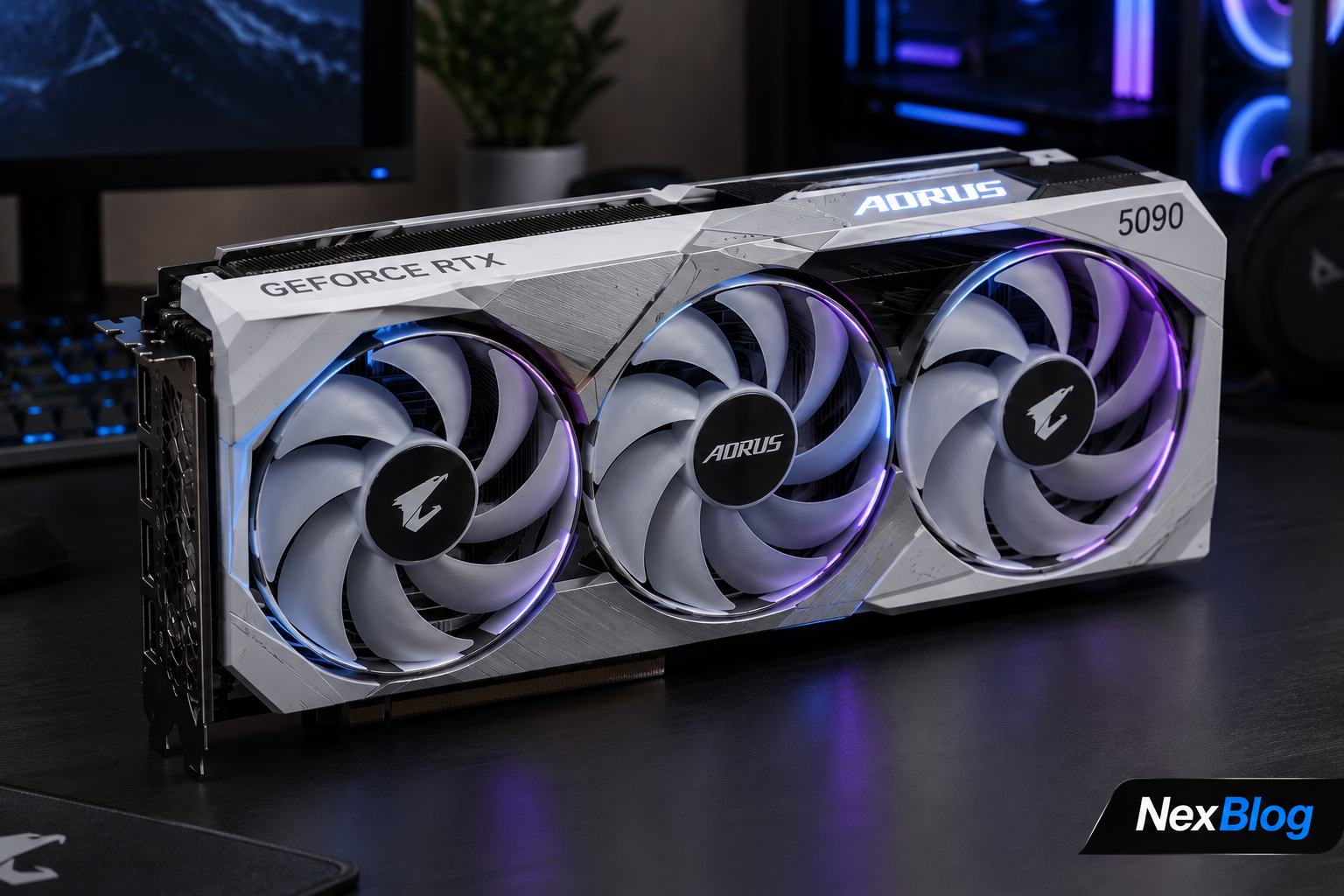
I will be direct: the RTX 5090 is absurdly priced and the performance gap over the 5080 does not justify it for gaming. The RTX 5080 is the sweet spot for people who want flagship-tier performance without the flagship price.
In 4K gaming, the RTX 5080 delivers 60+ FPS in every current title at max settings without DLSS, and well over 100 FPS with DLSS 4 Quality enabled. It handles ray tracing at 4K better than any card at this price has previously managed.
The 5080 also matters for AI work. Running local image generation (Stable Diffusion) or fine-tuning smaller AI models locally, the 16GB VRAM and raw CUDA performance make a real difference versus the 5060 Ti's 8GB.
Who should buy it: 4K gamers, AI hobbyists running local models, or professional creators who need maximum GPU compute.
NVIDIA vs AMD: Which Should You Pick?
NVIDIA advantages in 2026: DLSS 4 is still ahead of FSR 4 in image quality, the NVENC encoder is better for video work, and CUDA support means better compatibility with AI and creative applications.
AMD advantages: better price-to-performance at the budget and mid-range tiers, 12GB VRAM at lower price points, and open-source drivers that work better on Linux.
My rule: if you game on Windows and care about upscaling quality and creative software performance, go NVIDIA. If you are on a tighter budget, game on Linux, or want maximum raw performance per dollar, AMD is the smarter buy.
What About Intel Arc?
Intel's Arc B580 launched in late 2025 and is worth mentioning at the budget end. At ₹18,000, it competes with the RX 9060 XT and actually wins in some DX12 and Vulkan titles. The XeSS upscaling has improved considerably. The concern is driver maturity — older DX9 and DX11 games still occasionally have issues. If your game library is mostly modern titles from the last three years, Arc B580 is a legitimate budget option. If you play older games, avoid it.
Resale Value and Future-Proofing
GPU resale value drops fastest in the first year. If you buy mid-range, expect to lose 30-40% of value in 18 months. High-end cards hold value slightly better. The practical implication: do not buy more GPU than you need today expecting it to last eight years. Buy what works for your current monitor and game library, then upgrade when it stops keeping up.
For most people reading this in India: 1080p gaming remains the most common use case. The RX 9060 XT handles it excellently and costs less than a flagship phone. Spend the saved money on a faster SSD or better monitor instead.
Final Recommendations
- Tight budget, 1080p: AMD RX 9060 XT
- Best all-rounder, 1440p: NVIDIA RTX 5060 Ti
- High-end, 4K or AI work: NVIDIA RTX 5080
- Budget Linux gamer: Intel Arc B580
Whatever you pick: make sure your power supply has headroom. The RTX 5060 Ti needs a 650W PSU minimum, the RTX 5080 needs 750W. Skimping on the PSU with a high-end GPU is a common and expensive mistake.